Change

A resistance to change is a resistance to life itself.

If that statement prompts uncomfortable feelings, you are not alone. It seems that a great deal of what we do, and pursue, in our lives is in fact resistant to the intrinsic nature of life. Thinking about it honestly it’s hard to deny that life is change, hence the many variations of that observation and its expression by poets, philosophers, intellectuals and artists the world over.

There are, of course, changes we accept fairly easily, or at least grumble about less, because we perceive that they benefit us and are generally positive. And then there are the changes and the changing nature of what we prefer that we resist, sometimes to our detriment. I’m trying at any given moment (as I’m fairly certain you are) to exert some influence over how and when change impacts me, and that is not only understandable, but often necessary for my survival both real and perceived.

When I think about the idea that resistance to change is resistance to life itself, and that death is the ultimate change, our resistance all along the way would thereby seem to ensure that when the time comes it will be all the more difficult. I don’t mean to infer that death would somehow not be difficult at all if we weren’t resistant to change, but rather the more frequently we unconsciously brace and maneuver against other inevitable life changes (in relationships, grief, age, and illness for example) the harder we are making it for ourselves and others. And given that culturally we are death phobic, it makes sense to me that a general aversion to change over lifetimes and generations, has been a significant factor in our great fear of death and our struggles with feeling our grief and having it supported when our loved ones die.

***********************************************************************

A poet whose work I love died recently. I was lucky enough to hear them live as part of a spoken word evening when slam poetry was just becoming a thing years ago. I told Kissie about it. Now, as I’m trying to place when something happened, the passage of time is marked before and after her death.

“When nothing softens the grief, may grief soften me.” -Andrea Gibson

Grieving for the Living

Those who have not died, but are no longer in our lives as they once were, may also be mourned. Maybe there is reluctance to grieve if the parting was difficult, misunderstood, or unwanted, but there is sadness that often lingers beyond our ability to rationalize it away. I find it healthful to acknowledge that sadness, and the misgivings that can accompany the ending of relationships, especially long-lasting ones.

Even if the parting was mutual and understandable, we were part of each others’ lives and such endings are not easily accepted. Memories remain. Tangible reminders may be nearby, or ever present, and even the person themselves may still be in close physical proximity. As with all grief, it is personal and circumstantial and its depth and longevity will depend upon the unique relationship itself and what it meant to each person.

As with those who have died, mourning for the living is active and takes energy. We may feel as though in a fog as we adapt to life without them. The possibility (or improbability) of restoration is something to come to terms with, too, when the person mourned is alive. Hope, which may be unrealistic, can be a source of additional sadness, particularly if an explicit ending was not desired or expressed. The nebulous ending, therefore, can make grief more difficult.

For those I miss who are still living, but not presently part of my life, I remind myself that the love and the good we once shared is still real. The times and places, the experiences that brought us together and held us for a time, have enriched us. They ended, yes, and maybe for beneficial reasons, yet they remain a part of who we are.

For those I mourn who are living:
May you be happy,
May you be healthy,
May you be safe,
May you feel peace.

Regularly Scheduled Grief

Take a moment to think about what it would mean to schedule some grief time in your life. Doesn’t sound like fun, but as most adults know, meaningful time doesn’t usually fit such a strict definition. Meaningful sounds pretty great to me. So does connective, profound, cathartic, genuine, healing, releasing, revelatory, healthy, enlivening, enriching, and loving. These are all things I’ve felt and experienced because of regular expressions of my grief.

Scheduled grief can be weekly, monthly, seasonally, on designated anniversaries, all or some of those in different configurations, communally and solo. We all schedule time for things that are necessary and important to us: work, social activities, exercise, vacations, hobbies, intimacy, special occasions, etc. If the acknowledgment and expression of our grief is not important and meaningful to us, the culture at large stands no chance of prioritizing it. We give the meaningful people and practices in our lives our most precious gift: our time. And we owe it to ourselves to allow our grief to have a dedicated place in those practices that sustain us.

If you are newly in mourning, it may not be necessary to schedule grief time because the early weeks and months can be so emotionally overwhelming and time consuming. You may benefit from taking breaks from hard grieving, which can be especially exhausting. However, if expressing emotion is difficult for you, even in the beginning, then scheduled grief time could be helpful from the get-go.

Regularly scheduled grief doesn’t have to include weeping (although it certainly can and often does for some of us), nor does it mean allowing negative and overwhelming thoughts to cycle over and over until you’ve pushed yourself into a self-inflicted funk. It can look like allowing yourself some space and time to cry it out, preferably with an understanding grief partner or small group, giving voice to difficult stuff that happened or regrets or “second thoughts” about a loved one’s last days or an ending of some other sort. It can mean sharing stories, laughter, awe, meaning-making, and synchronicities with others who experienced the same ending or share a relationship with the same person, or someone you trust with your heart (a grief walker friend).

Just two days ago, I discovered that August 30th is National Grief Awareness Day. It was so named in 2014, seven months after my sister Christine died, to raise the collective consciousness about the needs (and benefits) of grieving people and the cultural imperative to support grievers (which is all of us) with understanding and compassion. In reading more about it, I found a post on social media from a somewhat well-known grief authority noting that of course we’re all aware of our grief and inviting readers to share what they wanted others to know about grief. The respondents shared some great insights. But I do disagree that we’re all aware of our grief. Talking about something and living in real awareness of it are the not same thing. I suspect that if we were all truly aware of our grief and conscious of how it impacts our choices and lives, the world would be quite different and our culture would look nothing like it does at present.

So although I missed the memo 10 years ago, having a designated day like this is a valuable tool with which to bridge our discussions and learning about an experience we all have, but don’t like to talk about. That said, it’s just one day, and as I have learned, regularly scheduled grief is the ongoing encounter with a fact of life, and a choice we make to care for ourselves and those we love, living and deceased.

Continuing Bonds II

“I paint flowers so they will not die.” -Frida Kahlo

I love that Frida painted flowers as a way to memorialize their existence and as an act of preservation for something that lives so beautifully and briefly. In the act of painting them, she remained connected to a part of the natural world that she loved, and we can do the same with our dear ones who have died by actions that demonstrate our ongoing bond.

I blogged about the concept and practice of “continuing bonds” not long after my sister Christine died, and 10 years later I find that the things I do to uphold and strengthen our bond are just as meaningful to me, even more so with the passage of time. My conscious actions to maintain our connection feel natural and good to do. A continuing bond can be anything that feels like a sustaining connection between the two of you, just as it does with someone who’s living. Each day, for example, I ring a chime for her and say good morning, upon waking. You can include others to expand the community bond. For instance on May 1, a family member and I texted about this being the beginning of “Kissie’s month” because of her upcoming birthday and today I shared a photo of my tulips with a long-time friend of hers who thinks of her fondly and frequently.

It’s been 28 years since the groundbreaking book on continuing bonds by Klass, Silverman & Nickman was published, and it’s heartening to see that it’s become a more normalized and encouraged grief practice. Let’s keep that trend going because deep cultural shifts take time. There are countless ways to continue a bond — reading the books or watching the films they loved, listening to their favorite music, traveling to places they visited or lived in, writing letters to them, creating poetry, music, or art about them, getting a symbolic tattoo, taking up a cause they believed in, praying for them — the possibilities are as varied and multi-faceted as the people themselves and they change over time. What are some of the ways that you continue your bonds?

It is said that Frida always signed her correspondence with “Remember me.” Maybe she instinctively knew that connections can be sustained with acts of remembrance.

Memory II

In pondering more about revisiting memories and allowing my mind and heart to be open, I find it helpful to differentiate it from rumination. Rumination is more of a closed loop recollection of an event, as I alluded to in my last post. It relies on the mind replaying the same details and outcomes over and over without an opening. So what exactly do I mean by that? If something happened a certain way and I allow for something else to now be a part of that previous memory, I am not just rewriting history?

Rewriting history would mean a deliberate distortion for a particular aim. To make myself feel better, justify behavior I chose in the moment, etc. That’s not what I mean. By an opening, or an open loop, in regard to a grief related memory, I mean the attitude of mind and heart that there may have been more that took place than I was able to comprehend at the time. It’s an attitude that allows that I cannot at any given time, see and hear and digest all the details around me. It is accepting that my memory of something is not the complete picture – not that it isn’t important or accurate or insightful – just that it might be incomplete. That there could be more and finer detail and perspective than my mind was able to perceive at the time. That attitude allows the opening in which the “memory of a memory” that I missed can bubble up into my consciousness. I didn’t see it at the time or remember it because I wasn’t able to. Maybe the circumstances were just too painful or overwhelming. So it must be looked at again in the mind, almost as if with “the eye of the heart,” like the ear of the heart is to the benedictine practice of lectio divina.

Allowing memory visitation is dedication to a belief that some previously unknown insights are waiting for me to catch up. Their existence and emergence can happen with my willingness and openness. Memories can and do ossify, but who decides when and how? As I shared last time, it’s daunting and lonely to show up for a grief practice that has no social or cultural etiquette. I do it because the revelations and communiqués I’ve received have been sustenance to me and also from some urging to continue that I can’t explain. It feels a little dangerous, too, because of all that’s out there about grief from the field of psychology, especially in the last 10 years. Not that I don’t think psychology can be hugely helpful when it comes to grief, it can and has been vital for me. But it also feels very limiting and outcome driven and overly rational to the point of diminishment. Death and grief can be approached and perhaps understood and integrated more without stripping away all vestiges of mystery.

Memory

Is memory a thing to be chosen? Are recollections deemed inappropriate or unhelpful, ones that we should banish? And when they visit us unguarded we should distract from them for the sake of our mental “health?”

I ask these questions because of course I prefer to visit my happy memories. Yet, the even the favored ones of my life come with a certain sadness simply because they are no more. A long time ago I learned to call that bittersweet.

If I’ve visited with my happy memories enough to allow them to just be there and allow that it might include some melancholy for awhile, and to stay with that, sometimes the sadness shape shifts. What I mean is that it doesn’t always lead to the same emotional place or to the same conclusions. Many times it does, and that’s what I mean about allowing it to keep coming back for awhile over time. And then sometimes it shifts – not away from melancholy but to another “memory of the memory” that brings an unnoticed nuance into view, like seeing some amazing detail in a photo that you missed before, even though you’ve looked at it many many times. How did I not see that? How did I not remember it?

You can’t get there by not revisiting, though, and you can keep going over the same happy details the memory has always relied on – same characters, places, sequence of events, and outcomes. After awhile I think that lack of an opening for “something else” to show up starts to shrink the memory until it becomes maybe a little trite? Not worth wasting a lot of attention on anymore? I’m starting to think the story is told and the memory revisited so that unseen (and unforeseen) details have a chance to emerge. As though they were hiding before. Waiting for me to catch up. Maybe waiting for recollecting in a group so others can contribute their threads of memory and allowing space for what may always have been there so it can bubble up. Or waiting for questions to be asked that weren’t asked before and for communiqués to come through to our consciousness that we wouldn’t or couldn’t let in before.

So if I apply that practice to the grief-filled memories I’d rather gloss over, distract from, and even forget? Same thing. But it’s harder, hurts more, and is lonelier. Because there’s not much (any) sweet to offset the bitter in the beginning. The other details haven’t had a chance to emerge because it hurts so much and we turn away. And staying with this kind of “memory practice” (grief practice) might even be looked upon as detrimental or abnormal (it most certainly is by our culture) and I’m not suggesting that it’s for everyone. And to make it all the more daunting, there is no formality to it or training or teachers. So why do it? Well, there’s a chance for the shape shifting, some revelation, and maybe communiqués. And I don’t think these are promised or guaranteed. It’s a practice that has no precedent in my memory, but there seems to be hints of it around from people who lived and died before me. I’m listening and I hear them.

Dirge Without Music

Thanks to the graciousness and generosity of the Millay Society’s literary executor, I am honored to share a poem I have returned to again and again for its courage and honesty.

This month marked eight years since Kissie’s death and twenty four since Dad’s, and the mournfulness that suffuses this month of their anniversaries, calls out to me for lamentation. It asks me for a rite, perhaps simple, but lovingly and staunchly given — for no amount of time erases the wonder that they were and the privilege of grieving them.

Dirge Without Music | Edna St. Vincent Millay

I am not resigned to the shutting away of loving hearts in the hard ground.
So it is, and so it will be, for so it has been, time out of mind:
Into the darkness they go, the wise and the lovely.  Crowned
With lilies and with laurel they go; but I am not resigned.

Lovers and thinkers, into the earth with you.
Be one with the dull, the indiscriminate dust.
A fragment of what you felt, of what you knew,
A formula, a phrase remains,—but the best is lost.

The answers quick and keen, the honest look, the laughter, the love,—
They are gone.  They are gone to feed the roses.  Elegant and curled
Is the blossom.  Fragrant is the blossom.  I know.  But I do not approve.
More precious was the light in your eyes than all the roses in the world.

Down, down, down into the darkness of the grave
Gently they go, the beautiful, the tender, the kind;
Quietly they go, the intelligent, the witty, the brave.
I know.  But I do not approve.  And I am not resigned.

“Dirge Without Music” (1928) by Edna St. Vincent Millay reprinted courtesy of Holly Peppe, Literary Executor, the Millay Society (www.millay.org).

In Honor of a Time

It’s been a long time since I’ve written here. And what a time it has been.

The grief of the pandemic has — and is still having — its way with me, as grief does if allowed in. Emotionally rocking me, dashing my expectations and hopes, and showing me things about myself and others I thought I’d rather not see. Exacting unplanned solitude. Exalting togetherness in a way that only the threat of separation can.

In many ways, I’ve cleaved to the solitude and limitation, much of it pandemic-imposed because of underlying health concerns, but some of it self-imposed because the time we are living in seems to be asking something of us and I want to attend to it somehow. Just as I did with my personal grief, and grief in general, when I started this blog in 2015. I feel largely alone in this, too.

My writing lately has gone to journaling, memoir, and plain contemplation, mostly about Kissie and grief. Yet, these past couple of weeks, as the year ends, I’m feeling drawn back here. A couple of friends have mentioned missing my thoughts about grief, especially as it relates to what we’re going through with the pandemic. They have no idea how much that means to me.

I wonder, too, if they’re expressing an unspoken, but persistent sense that as we rush unquietly back to business as usual, trying to recapture what has ended, we may be passing over an important grief and its counsel. Leaving it mostly unprocessed at best and ignored at worst. And are we, in the process, eschewing a “grief practice” this pandemic time might be urging us toward?

I’m impatient and fatigued with discomfort, the moving target of fear, and inconvenience, too. It’s in the cultural water, so it’s herculean not to be. And just as with death and grief, we want to get past it as quickly as possible and get things back to normal and comfortable again. “The top six steps experts suggest to embrace the post pandemic lifestyle” — is what I see most, of course. I’d like to make some space here for other perspectives about a post-pandemic life. Or maybe a pandemic life, first. And the sadnesses, beauties, reckonings, gratitudes, and unexpected clarity to be found here.

Your hair

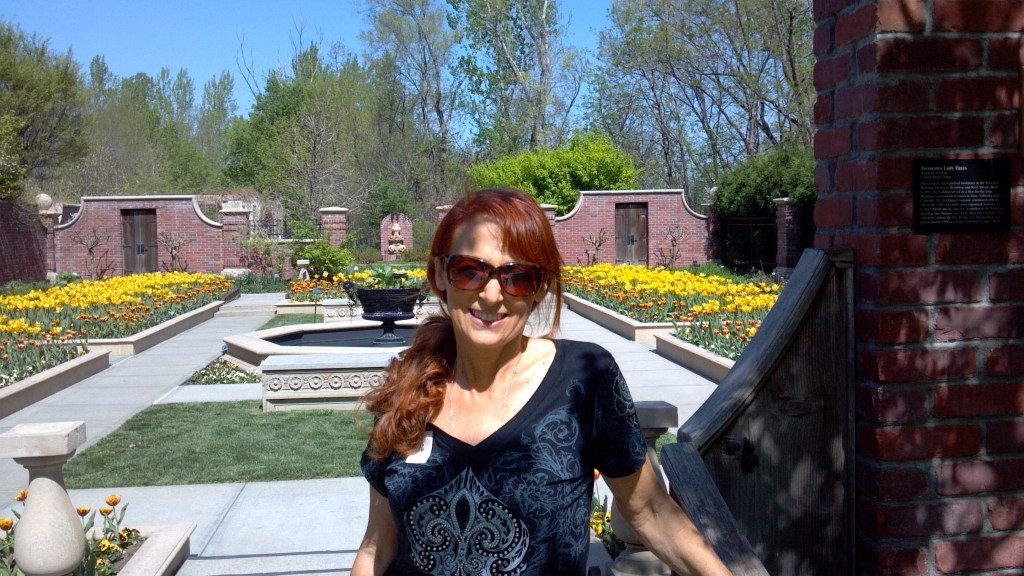
…was an indescribable color. Red-head just doesn’t come close. Besides, red always makes me think of tomatoes. Like a fire agate, it was unmatched and heterogenic in its hues, or like burnished copper, resplendent in its patina. Sometimes, over the years, it was like the deep siennas of Sedona’s red rocks or bleached by the sun like a bright new penny.

As a child it was much lighter—strawberry blonde they called it—and it turned heads from the outset. You lightened it from time to time as a young adult, and cancer treatment changed its saturation for a time, too, but you came to embrace its natural iridescence as you did your own, with effortless grace and gratitude.

It never failed to tickle me when we were out and about and a stranger’s eyes would flash on the sight of you, marveling at your unexpected beauty. “In your dreams,” I’d think.

Acts of commemoration

It’s January again and our last family hours together, as we were, are what I think about most intently in the quiet moments from Christmas to January 5th, the day you died. The sun has broken through the dense and days long winter clouds as I write this — one of my special ways of knowing you are thinking of me, too.

The morning you died was bright and warm, and you had woken early, as you liked to, and asked Jeff to get you a cookie while on his coffee run. We marvel about that now, it’s one of our stories. How your nonexistent appetite suddenly turned and you wanted, of all things, a cookie! It’s a funny sort of comfort, to know about that little conversation in the kitchen with Jeff and your request. That you had the strength to get out of bed and share a little moment when the time was nigh. Then, shortly after 9:00 a.m., the cookie unprocured, you died, with us gathered around your bed.

I like to mark these days, the 4th and 5th especially, with little commemorations and rituals in your memory. Like a birthday’s welcome and hello, a deathday’s goodbye and thank you. 2020 is the sixth anniversary of your death, and also a Sunday, which it was when you died. And, significantly, it is Mom’s birthday — hello and goodbye, celebration and gratitude — always together now.

I also relish knowing what other family members and friends are doing in remembrance and celebration of you, when we can’t be together. These are a few of the ways I’m commemorating this year:

  • a votive candle by your photo
  • this blog post
  • writing about this time in my journal
  • asking family who were there to share a memory with me of the last day of your life
  • conversing with family and friends who want to reminisce
  • watching the video Jeff made for your memorial
  • attending Epiphany mass, as we did on January 5, 2014
  • going for a meditative walk, weather permitting
  • drinking tea in a china teacup
  • watching one of your favorite movies
  • eating oranges, as we did the day you died
  • burning a fire in the hearth and reading your handwritten words.